


How Ceiling Fan Manufacturers Achieve 5-Star Energy Ratings

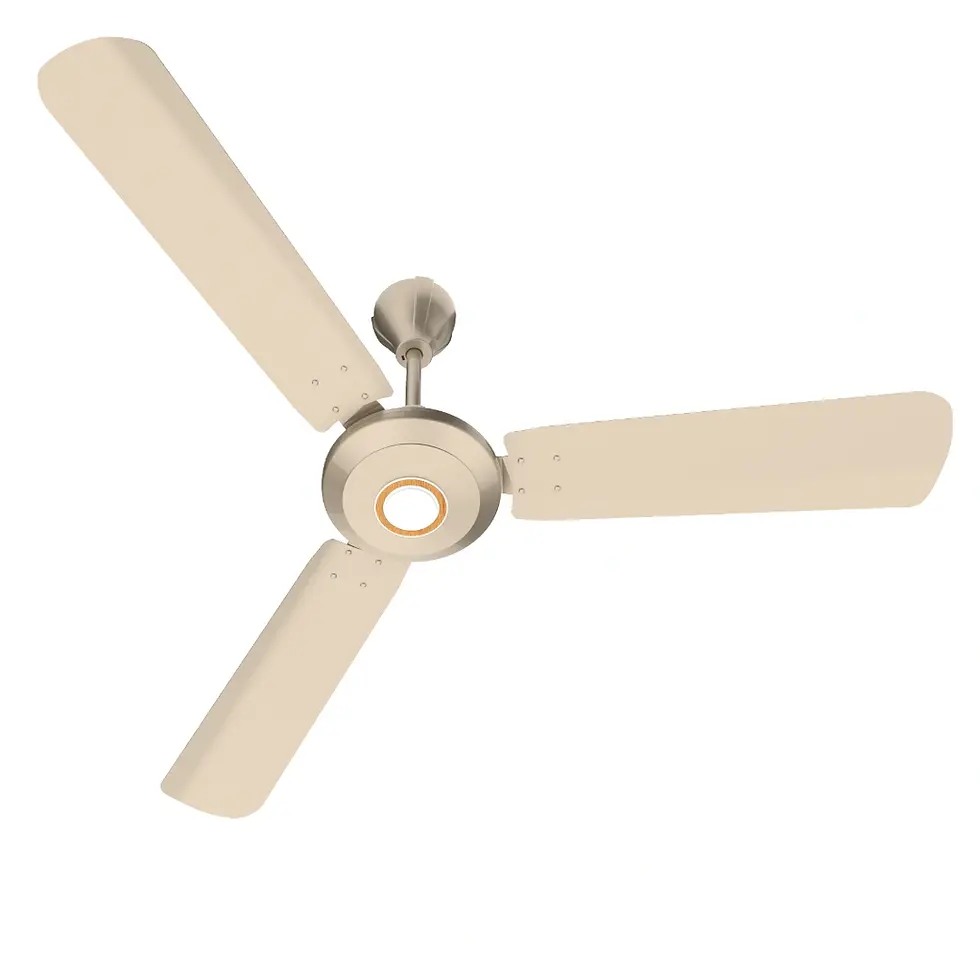
The development of 5-star ceiling fans required designers to work through multiple testing phases until they achieved the final product. The process requires manufacturers to establish their air distribution systems and motor energy consumption metrics while testing component performance across extended operational periods.
The ceiling fan industry achieves energy efficiency through its combination of intelligent engineering methods advanced motor systems, thorough testing procedures and strict production standards.
The design team selects specific blade aerodynamics and electronic control systems to achieve optimal airflow performance while consuming minimal electrical power. This blog breaks down how those choices come together to create truly energy-efficient ceiling fans.
What “5-Star” Actually Means
The 5-star energy rating serves as a comparative certification that demonstrates that the fan requires less electricity during standard tests than all fans with lower energy ratings.
The testing process evaluates products before accredited authorities issue ratings which differ according to local regulations. The rating system functions as a practical goal for manufacturers because it extends beyond decorative purposes.
Key Takeaways
The testing measures performance under specific speed and load conditions which remain constant throughout the evaluation.
The rating shows how products use energy and what their efficiency standards are when operating at different speed levels.
Manufacturers create products to meet testing requirements before they start designing for actual operational scenarios.
Aerodynamics & Blade Design: The First Battleground
The research shows that improved lift through reduced air resistance results in increased airflow efficiency which operates at higher power consumption.
The fan's airflow efficiency depends on the combination of blade angle specifications and blade shape elements which include blade curvature, blade length and blade tip design.
The combination of surface finish and cross-section design elements creates an effect that decreases drag while producing micro-turbulence reduction.
Manufacturers use CFD simulations for testing multiple design options before they create their first physical product.
They conduct blade pitch optimization according to motor speed requirements and they later analyze results through real-world tests conducted in the testing chamber.
They achieve optimal blade performance through precise balance operations which reduce wobble losses to their lowest possible level.
Motor Technology: BLDC vs Induction
Motors represent the biggest factor that determines energy consumption.
BLDC (brushless DC) motors:
Traditional AC induction motors require more power to achieve comparable airflow than BLDC motors.
The system provides exact speed control while operating at reduced power consumption and improved efficiency during partial load conditions.
The system operates at lower temperatures because it uses brushless technology which prevents component failure through brush wear.
Current 5-star fans utilize BLDC and advanced EC motors as their main technology to achieve maximum energy efficiency despite the availability of high-efficiency AC solutions.
Drive Electronics & Control: Making Every Watt Count
Manufacturers direct their efforts toward creating efficient motor technology and optimized switching frequencies to decrease electrical power losses.
The system operates at its highest efficiency level through advanced control algorithms which use sensorless commutation for BLDCs and torque control to maintain motor control.
The fan consumes excessive power during its "off" state which results in energy losses that eliminate all advantages from its low standby power and smart sleep states.
The comparison between PWM (pulse-width modulation) and sinewave drives shows that both options possess specific advantages and disadvantages which lead designers to select drivers that minimize switching losses while providing acoustic comfort through their optimal design processes.
Materials, Bearings & Mechanical Losses
The materials provide support through their lightweight properties which enable blades to maintain their operational efficiency while carrying their full weight.
The system operates with decreased energy waste because its components use low-friction bearings which create fewer obstacles and generate less heat.
The system creates less noise and energy waste because it operates with precise shaft and housing measurements that meet strict specifications.
Manufacturers select materials that provide an effective balance between upfront costs and future efficiency during manufacturing because these materials lead to performance improvements and enhanced energy performance.
Quality control & Manufacturing Discipline
The test sample requires all units to meet its exact standards because it is a benchmark for 5-star performance.
The important manufacturing practices include:
Using statistical process control (SPC) to detect process variations at their initial stages.
Using automated assembly balancing to ensure all products achieve identical aerodynamic performance standards.
End-of-line process testing to verify power and airflow efficiency across all production units.
The system needs traceable component sourcing (motors, drivers, capacitors) to ensure each fan operates with predictable performance.
Testing, Certification & Lab Protocols
Typical steps:
Prototype development and in-house testing.
Third-party lab testing under prescribed protocols.
The rating agency receives technical documents and test results through the submission process.
The company conducts post-approval factory audits together with ongoing compliance batch testing.
Manufacturers invest heavily in pre-lab validation to avoid costly retests and to ensure the delivered product mirrors the certified sample.
How To Choose A Genuinely Efficient Fan
Buyer checklist:
Fans that use BLDC motors should be selected as the preferred option.
The 5-star accredited label should be used to verify the testing standard that appears on the label.
The specification sheet will display the power rating which needs to be tested at every operational speed.
The product demonstrates positive features through its energy-efficient standby power and its strong warranty coverage especially for the motor component.
The presence of smart features requires testing to ensure they do not create excessive power consumption during standby periods.
Conclusion
The 5-star energy rating achievement results from numerous small improvements that engineers developed through their work. Manufacturers optimize blade designs while they use advanced motors to minimize energy waste and test their products in controlled laboratory environments.
The system provides benefits to people who make decisions based on long-term results instead of choosing quick solutions. The 5-star rated ceiling fan provides consumers with energy savings together with advanced engineering designs, silent operation and permanent performance stability.
The ceiling fan energy ratings show their value. So get 5-star rated BLDC fans from Victura Airmotion for year-round, comfortable experiences.
Frequently Asked Questions (FAQs)
Q1. What makes a ceiling fan energy star?
The energy star label becomes available to a ceiling fan that successfully meets all efficiency requirements according to energy STAR program standards as this particular fan model generates higher airflow while consuming substantially less power than typical ceiling fans.
Q2. What is the difference between 1 star and 5 star ceiling fans?
The main difference is power consumption. A 5-star fan uses much less electricity to deliver similar or better airflow compared to a 1-star fan, resulting in lower running costs over time.
Q3. How to calculate star rating in fan?
Star ratings are calculated through standardized lab tests that measure airflow and power consumption at different speeds. The results are compared against defined efficiency thresholds set by rating authorities.
Q4. Are 5 star ceiling fans energy-efficient?
Yes, 5 star ceiling fans provide energy-efficient performance according to their design specifications.
Q5. How much power does a 5 star ceiling fan use?
Fans rated five stars often draw between 25 and 35 watts when running at full power, though exact usage shifts based on how the motor is built. Still, efficiency hinges less on rating and more on internal engineering choices made during production.
Q6. Are newer ceiling fans more energy-efficient?
Yes. Fans made today often run more efficiently because they include upgraded motors, smoother airflow designs, yet also feature more responsive settings. These improvements add up to less power used overall.


Comments